
Overview: Which Visas Can Be Extended
Not all visas can be extended in Thailand. Some visas are designed as single-entry permits with a fixed permitted stay. Others allow in-country extension at an Immigration office. Understanding which visas are extendable and the 2026 rule changes is critical for planning your stay.
The main short-stay visas and their extension rules are summarized in the table below.
| Visa Type | Initial Stay | Extendable | Extension Length | Total Max Stay | 2026 Quota Notes |
|---|---|---|---|---|---|
| Visa-Exempt (1st entry) | 60 days | No | . | 60 days | 1 of 2 per year allowed |
| Visa-Exempt (2nd entry) | 60 days | Yes | +30 days | 90 days | 2 of 2 per year; extension at Immigration only |
| Tourist Visa (Single) | 60 days | Yes | +30 days | 90 days | Independent of exempt quota |
| Tourist Visa (Double) | 60 days | Yes (first entry) | +30 days | 90 days per entry | Independent of exempt quota |
| Visa on Arrival (VOA) | 60 days | Yes | +30 days | 90 days | Independent of exempt quota |
| DTV | 180 days | Yes | +180 days | 360 days | No quota restrictions |
2026 Change: Visa-exempt entry is now limited to 2 times per calendar year. The first entry cannot be extended. The second entry can be extended by 30 days at Immigration. This is separate from the Tourist Visa, VOA, and DTV systems.
Visa-Exempt Extension (2nd Entry Only)
Thailand offers visa-exempt entry to citizens of certain countries, granting 60 days per entry. As of 2026, the limit is 2 visa-exempt entries per calendar year (down from unlimited). Only the second entry can be extended.
First Exemption Entry (Non-Extendable)
The first visa-exempt entry of the year cannot be extended. The permitted stay is fixed at 60 days. To stay longer, you must either depart Thailand or obtain a different visa.
Second Exemption Entry (Extendable)
The second visa-exempt entry can be extended once, by 30 days, at an Immigration office. This brings the maximum stay on the second entry to 90 days. After that, you have exhausted both annual exemptions.
Extension application for the second exemption entry:
- Apply at an Immigration office (e.g., Chiang Mai Immigration Mae Rim Office)
- Timing: Apply within 7 days of arrival or before your 60-day period ends; latest is the last day of your allowed stay
- Form: TM.7 (Application for Extension of Permitted Stay)
- Fee: 1,900 THB
- Processing: Usually 1 business day
- Documents: Passport, TM.7 form, 1 passport photo, proof of funds
Tourist Visa Extension
The Tourist Visa (applied at a Thai embassy before arrival) grants 60 days per entry. Single-entry and double-entry options are available. The first entry of either option can be extended by 30 days at Immigration.
Extension process:
- Apply at an Immigration office
- Timing: Before your 60-day period ends
- Form: TM.7
- Fee: 1,900 THB
- Processing: Usually 1 business day
- Documents: Passport, TM.7, 1 photo, proof of funds
Tourist Visas do not count toward the annual 2-visa-exempt-entry quota. You can use a Tourist Visa and 2 visa-exempt entries in the same calendar year if needed.
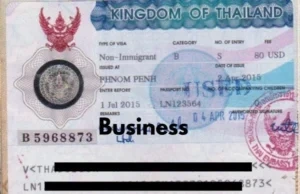
Visa on Arrival (VOA) Extension
The Visa on Arrival can be extended once by 30 days, bringing the total stay to 90 days. The extension process is identical to the Tourist Visa extension above.
The VOA is single-entry only. After your 90 days (60 + 30 extension) end, you cannot re-enter on the same VOA. You must depart Thailand and either reapply for a new VOA or obtain a different visa.
DTV Extension
The Destination Thailand Visa comes with a 5-year validity and allows multiple entries. Each entry grants 180 days. A single in-country extension of up to 180 days can be applied for at Immigration.
DTV extension:
- Apply at an Immigration office
- Timing: Before your initial 180-day period ends
- Form: TM.7
- Fee: 1,900 THB
- Documents: Passport, TM.7, 1 photo, proof of funds (may be required)
The DTV extension is independent of the visa-exempt quota and does not count toward any annual limits.
TM.7 Form (Extension Application)
All short-stay visa extensions in Thailand are processed using the TM.7 form. This is a standard immigration form requesting your personal details, passport information, reason for extension, and certifications.
The form is available at all Immigration offices and can sometimes be downloaded from the Thai Immigration Bureau website. Staff at Immigration can assist with completing the form in English.
Chiang Mai Extension Process
Chiang Mai Immigration (Mae Rim Office, north of the city) handles extensions for residents and visitors in the Chiang Mai area.
Steps to Extend
- Prepare documents: passport, completed TM.7 form (available at the office), 1 passport-sized photo, proof of funds (10,000–20,000 THB in cash or bank statement)
- Arrive early: The office opens at 8:30 AM. Morning walk-ins are processed faster than afternoon submissions
- Submit your application at the counter
- Pay the fee (1,900 THB)
- Receive a receipt with a return date (usually next business day)
- Return to collect your passport with the extension stamp
Processing time is typically 1 business day. Staff at Chiang Mai Immigration speak Thai and limited English; bringing a Thai speaker or translator is helpful but not required. Many tourists use a translation app on their phone if needed.
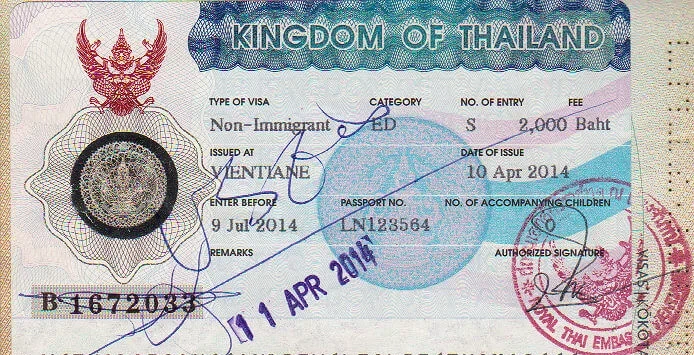
Extension Fees
| Extension Type | Fee (THB) |
|---|---|
| Short-stay extension (TM.7) | 1,900 |
When You Cannot Extend
Extensions are denied in the following situations:
- You do not hold a valid visa or entry stamp
- You are subject to an immigration ban or previous overstay penalties
- Your passport has less than 6 months validity
- You have missing or incomplete documents
- You are applying after your permitted stay has already expired (overstay)
- You attempt to extend a visa type that does not allow extensions (e.g., first visa-exempt entry)
Re-Entry and Extensions
If you extend your stay and then depart Thailand, you need a re-entry permit to keep your extension valid. Without it, your permission to stay is revoked upon exit and any extension becomes void. A re-entry permit costs 1,000 THB (single entry) or 3,800 THB (multiple entries) and is obtained at Immigration before departure.
See the re-entry permit guide for details.
90-Day Reporting
If your extended stay spans more than 90 days from initial entry, you may be required to report at Immigration every 90 days. This applies primarily to long-stay visa categories (such as retirement or long-term resident visas). Most short-stay extensions do not trigger this requirement, but check with your local Immigration office to confirm your situation.
Disclaimer
This guide is informational only. Thai immigration rules, fees, and extension procedures change regularly. For official and current information, contact the Thai Immigration Bureau, your nearest Immigration office, or visit immigration.go.th. Immigration decisions are at the discretion of Thai authorities.
Last verified: February 2026