
Who This Visa Is For
The Thai Tourist Visa (TR) is for foreign nationals who want to visit Thailand for tourism, leisure, or short-term purposes and either: (a) are not eligible for visa-exempt entry, or (b) are eligible for visa exemption but need or prefer advance visa approval for a longer planned trip.
Nationals of countries with visa exemption agreements with Thailand can also apply for a Tourist Visa. Importantly, a Tourist Visa entry is separate from visa-exempt entry . using a Tourist Visa does not consume one of the two annual visa-exempt entries now permitted under the 2026 rule. This is a practical reason some eligible travelers choose a Tourist Visa for longer planned stays.
For a full overview of short-stay options, see the short-stay visa hub on CMLocals. This page covers general information only and is not legal or immigration advice.
Official Classification
Non-Immigrant Visa category TR (Tourist). Issued by Thai embassies and consulates abroad. Not issued at Thai Immigration offices inside Thailand . there is no in-country Tourist Visa application.
Validity and Extensions
| Feature | Detail |
|---|---|
| Visa validity | 3 months from date of issue (must enter Thailand within this window) |
| Permitted stay on entry | 60 days |
| In-country extension | +30 days, applied at Immigration before expiry |
| Total stay possible | 90 days (60 + 30) |
| Single entry | Standard . one entry only |
| Double entry | Available at some embassies . allows a second 60-day entry within the 3-month visa validity |
| Multiple entry | Not available for the standard tourist visa |
A Tourist Visa entry is separate from visa-exempt entry. Using a Tourist Visa does not reduce your visa-exempt entry allowance, which is tracked on a rolling 365-day basis. Travelers who want to preserve their exempt entries for other trips . or who have already used both within their rolling window . benefit from having a Tourist Visa.
Financial Requirements
No minimum financial amount is mandated in law for tourist visa applications, but embassies typically require evidence of funds sufficient for the trip. Requirements vary by embassy.
| Requirement | Detail |
|---|---|
| Funds evidence | Bank statement showing sufficient funds . many embassies informally expect a balance equivalent to 20,000+ THB per person |
| Accommodation proof | Hotel booking or confirmed address in Thailand |
| Onward/return ticket | Required or strongly expected |
| Health insurance | Recommended; some embassies require it . check with your specific embassy |
Required Documents
- Valid passport (minimum 6 months validity beyond intended departure from Thailand)
- Completed Thai visa application form (check your embassy's website for the current form)
- Passport-size photos (typically 4×6 cm, white background . check embassy specifications)
- Bank statement (typically last 3–6 months)
- Round-trip or onward travel booking confirmation
- Hotel or accommodation booking
- Application fee payment (confirm current amount with your embassy)
Application Process
- Locate your nearest Thai embassy or consulate. Not all consulate offices process tourist visas . verify before visiting.
- Download and complete the visa application form from your embassy's website.
- Compile all required documents and copies.
- Submit in person or by post (depends on embassy). Some embassies use VFS Global for document submission . check your local arrangement.
- Wait for processing . typically 3–5 business days; longer during peak periods.
- Collect passport with visa sticker, or receive by return post if applicable.
- Enter Thailand before the 3-month validity window expires. Receive the 60-day entry stamp from the immigration officer on arrival.
Do not book non-refundable flights until you have the visa in hand. Processing times vary and are not guaranteed. Allow at least 3–4 weeks before your intended travel date.
In-Country Extension . +30 Days
A Tourist Visa can be extended by 30 days at any Thai Immigration office. The application must be submitted before the 60-day entry stamp expires. One extension is available per entry.
- Visit Chiang Mai Immigration (71 Mahidol Road) before your 60-day stamp expires.
- Bring: passport (original), TM.7 form, passport-size photo (4×6 cm), proof of accommodation (rental agreement, hotel booking, or TM.30 receipt).
- Pay the extension fee (approximately 1,900 THB . verify current fee at the time of application).
- Receive new 30-day stamp. Processing is typically same-day when documents are complete.
Chiang Mai Application Notes
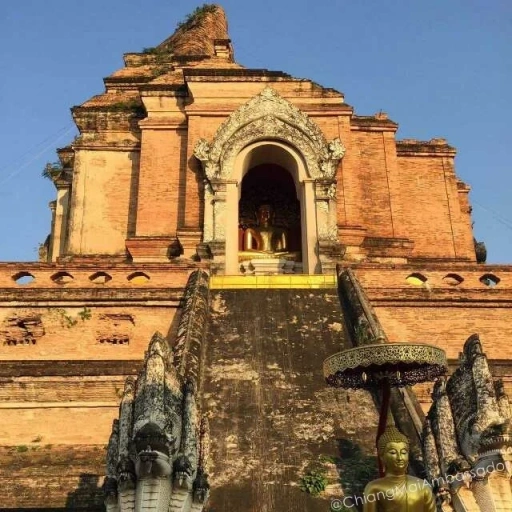
The Tourist Visa itself must be applied for abroad . Chiang Mai Immigration does not issue Tourist Visas. The in-country 30-day extension, however, is processed at Chiang Mai Immigration (71 Mahidol Road). Office hours are 8:30 AM – 4:30 PM, Monday to Friday. Arrive early; queue numbers fill quickly during peak season (November–February).
Bring extra copies of all documents. Officers occasionally request pages not listed in standard guidance. The extension is generally same-day if documents are complete. Incomplete applications result in a return visit.
For 90-day address reporting requirements, see the Immigration compliance hub. TM.30 registration from your landlord is required within 24 hours of your arrival at any new accommodation.
Tourist Visa vs Visa-Exempt Entry
Travelers who hold nationality eligible for visa-exempt entry sometimes ask whether to bother with a Tourist Visa. The practical differences in 2026:
| Factor | Tourist Visa | Visa-Exempt Entry |
|---|---|---|
| Advance application | Required (embassy) | Not required (on arrival) |
| Fee | Embassy fee (varies) | Free |
| Initial stay | 60 days | 60 days |
| In-country extension | +30 days (any entry) | +30 days (second entry only) |
| Counts toward visa-exempt limit | No | Yes (rolling 365 days) |
| Border run resets entry | Requires new Tourist Visa abroad | No (rolling 365-day limit applies) |
Common Pitfalls
- Confusing the 3-month visa validity with the 60-day permitted stay. The visa must be used (first entry made) within 3 months of issue. Once used, the 60-day stay period begins from the entry date . not from the issue date.
- Missing the in-country extension deadline. The extension must be applied before the 60-day stamp expires, not on or after the expiry date. Apply at least 3–5 days early.
- Applying at the wrong embassy. Apply at the embassy serving your country of residence (rules vary by embassy . some accept non-nationals, others do not). Verify before submitting.
- Assuming the Tourist Visa allows work. It does not. The Tourist Visa is for tourism and leisure only. Remote work for a foreign employer is a legally grey area . seek professional advice if relevant.
Related Visa Options
Frequently Asked Questions
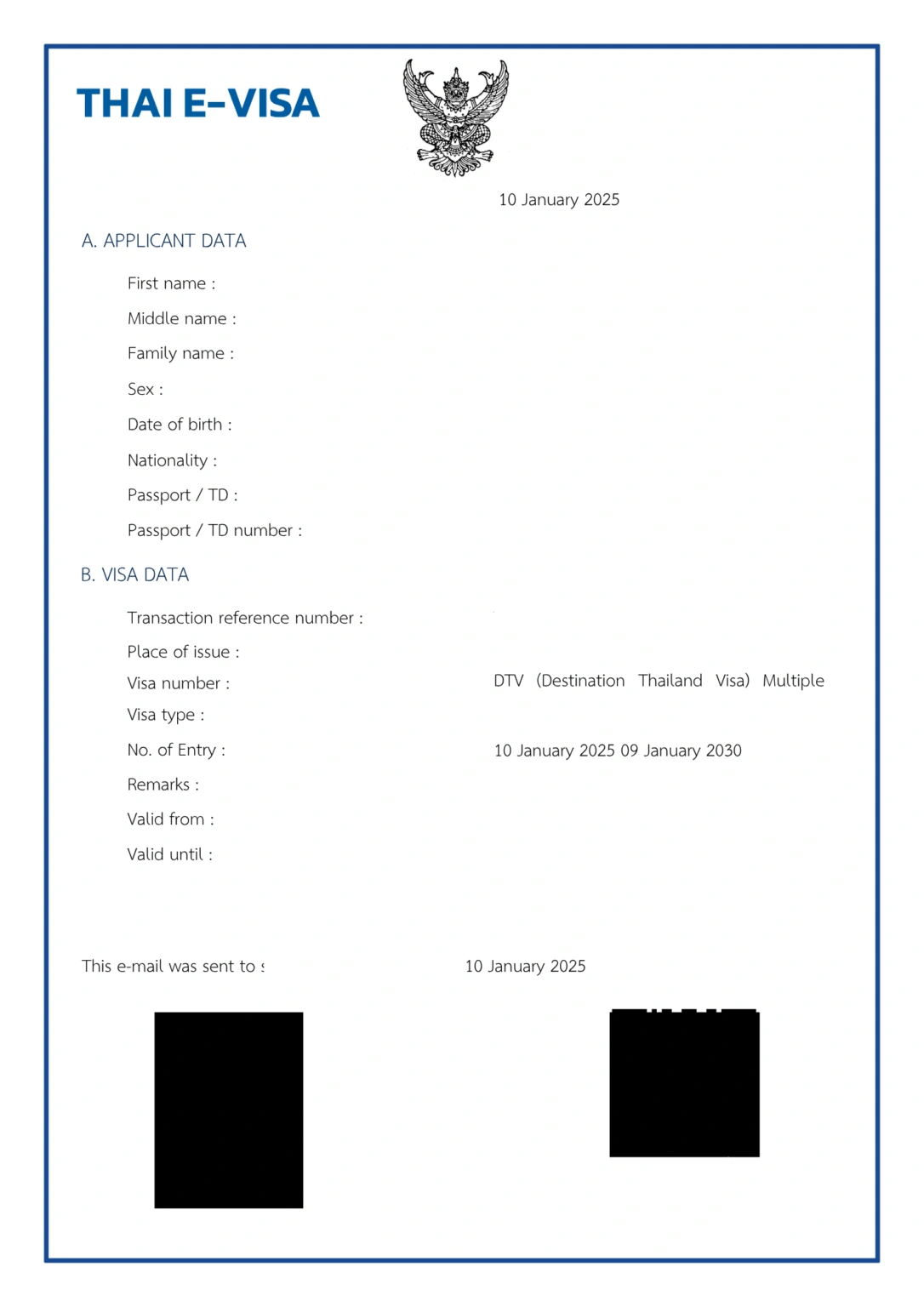
No. The Tourist Visa must be applied for through the eVisa system at https://www.thaievisa.go.th/ before entering Thailand. You cannot obtain a fresh Tourist Visa from inside Thailand. If your current stay is ending, you would need to depart and apply through the eVisa system. Obtain information from the Thai embassy or consulate website for your jurisdiction.
Yes. The Tourist Visa is a formal visa applied for and approved before arrival. Visa-exempt entry is a free stamp given on arrival to nationals of eligible countries. They are separate . a Tourist Visa entry does not count toward the rolling visa-exempt entry limit.
No. One 30-day extension is available per Tourist Visa entry. After that extension expires, you must depart Thailand and re-enter on a new visa or use a remaining visa-exempt entry. Further in-country extensions on a Tourist Visa are not available.
Immigration officers may request evidence of sufficient funds on arrival even with a Tourist Visa. 20,000 THB (individual) or 40,000 THB (family) is the commonly cited informal threshold for tourist entry. Keep accessible funds available . cash or a bank statement on your phone.
The Tourist Visa does not include work authorisation. Remote work for a foreign employer is a legally grey area in Thailand. For clearer legal status for remote workers, the DTV (Destination Thailand Visa) or LTR Work-from-Thailand category are more appropriate options. Seek professional advice if relevant.
Allow at least 2–3 weeks, preferably 4 weeks, to account for processing time, postal delays, and peak periods at embassies. Do not book non-refundable flights until you have the visa in hand. The visa is valid for 3 months from issue . do not apply too early or the validity window may expire before your trip.
Disclaimer – General Thai Visa Advice Only
CMLocals specialises in ED Visas and Volunteer Visas. The Thai Tourist Visa is covered here as part of broader Thai visa advice for Chiang Mai.
Requirements, fees, and processing times vary by Thai embassy and consulate. Always verify current requirements directly with the Thai embassy or consulate where you intend to apply before submitting an application.
This page is general information only and cannot replace personalised legal or immigration advice.
Last verified: February 2026