
Who This Visa Is For
The Non-Immigrant B visa . commonly called the Non-B or business visa . is the standard entry document for foreign nationals who intend to work legally in Thailand for a Thai employer. It is also used for business activities that fall short of employment: attending meetings, conducting negotiations, or setting up a company.
In most cases, the Non-B visa is the precursor to a work permit. Without a valid work permit, holding a Non-B visa does not authorise work. The visa and the work permit are two separate documents, both required to work legally.
For a broader overview of Thai visa options see the Thai visa options hub. This page covers general information only and is not legal or immigration advice.
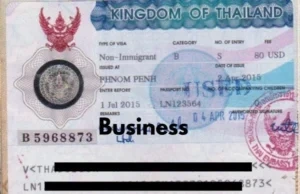
Official Classification
Non-Immigrant Visa Category B (Business/Work). Issued at Thai embassies and consulates abroad for initial entry. Annual extensions of stay are processed at local Immigration offices (e.g., Chiang Mai Immigration) once a work permit is in place.
Validity and Extensions
| Feature | Detail |
|---|---|
| Initial visa | Single or multiple entry; typically 90 days initial permitted stay |
| Annual extension | 1 year, tied to valid work permit |
| Extension condition | Must hold a valid work permit for the same employer. Extension refused if work permit lapses. |
| Re-entry permits | Required before leaving Thailand during an extension period. Single or Multiple. |
| Multiple entry Non-B | Available from some embassies for specific use cases (e.g., BOI-promoted companies) |
The Work Permit Requirement
A Non-B visa alone does not authorise work. A separate work permit (bai anuyat thamngaan) must be obtained from the Department of Employment before beginning any employment. The work permit specifies:
- The employer (you cannot work for a different employer without a new permit)
- The job position and duties
- The province in which you may work
Work permits are employer-sponsored. The employing company must meet staffing ratio requirements (typically 4 Thai employees per 1 foreign employee, though exceptions exist for BOI-promoted companies and certain industries).
Working without a valid work permit in Thailand carries serious consequences including fines, deportation, and a ban on re-entry. This applies even if you hold a valid Non-B visa. Ensure your work permit is active before starting work, and confirm it covers your actual job duties and location.
Employer Requirements
Thai employers sponsoring a Non-B visa and work permit must typically meet these requirements:
| Requirement | Detail |
|---|---|
| Company registration | Registered Thai company (limited company, representative office, or BOI-promoted entity) |
| Minimum registered capital | 2 million THB per foreign employee (standard; reduced for some company types) |
| Thai:foreign staff ratio | 4:1 (Thai employees to foreign employees) in standard cases |
| Tax compliance | Company must be tax-registered and filing returns |
| Revenue Department registration | VAT registration required for some company types |
BOI-promoted companies and companies in certain Special Economic Zones may qualify for relaxed staffing ratios and simplified work permit processes. If your employer has BOI status, confirm which rules apply.
Application Process
Initial Non-B visa (from abroad)
- Secure a job offer and obtain a formal letter of offer or invitation from the Thai employer.
- Apply for Non-B visa through the eVisa system at https://www.thaievisa.go.th/. Obtain information about requirements from the Thai embassy or consulate website. Submit your application with required employer documentation through the eVisa portal.
- Enter Thailand on the Non-B visa (initial 90-day permitted stay).
- Employer applies for work permit at the Department of Employment (usually in Bangkok or the relevant provincial office). You must be present for the application.
- Once the work permit is issued, apply for a 1-year extension of stay at Chiang Mai Immigration (if based in Chiang Mai).
Annual extension (in-country)
- Ensure work permit is valid and renewed before applying for visa extension.
- Submit extension application to Chiang Mai Immigration before current stamp expires.
- Bring work permit original, passport, TM.7 form, TM.30, employer documents, and copies.
- Receive new 1-year extension stamp. Repeat annually.

Chiang Mai Application Notes
Chiang Mai Immigration (71 Mahidol Road) handles Non-B extension of stay applications for foreign workers based in Chiang Mai province. Work permit applications are handled by the Department of Employment in Chiang Mai . a separate office from Immigration.
Teachers and education sector workers make up a significant portion of Non-B holders in Chiang Mai. Language school teachers, international school staff, and university lecturers are common applicants. ED Visa holders transitioning to a work-based visa may encounter this route.
Bring the original work permit and a letter from your employer confirming continued employment at each annual extension. Chiang Mai officers check the work permit's listed employer matches the sponsoring company.
Pros and Cons for Chiang Mai
Why the Non-B works for Chiang Mai workers
- The only route for most foreign nationals to work legally in Thailand for a local employer.
- Annual renewal structure is well understood by Chiang Mai Immigration and local HR departments.
- Employer handles much of the documentation . reduces individual bureaucratic burden compared to self-sponsorship routes.
- Stable legal status when work permit and visa are in sync.
Limitations to consider
- Tied to a specific employer . changing jobs requires a new work permit and typically a new visa process.
- Employer must meet capital and staffing ratio requirements . small or informal employers may not qualify.
- Provincial restriction on work permit . you may not legally work in a different province without amending your permit.
- Annual in-person renewal required at both Department of Employment (work permit) and Immigration (stay extension).
- Re-entry permit required before international travel during extension period.
A realistic example
A 29-year-old Canadian teacher is offered a full-time position at an international school in Chiang Mai. The school sponsors her Non-B visa . she applied at the Thai Embassy in Ottawa, entered Thailand, and the school's HR department handled her work permit application at the Chiang Mai Department of Employment. She receives a 1-year extension at Chiang Mai Immigration shortly after, tied to her work permit. She renews both documents in the same month each year.
Common Pitfalls and Misunderstandings
- Starting work before the work permit is issued. This is one of the most common errors. The work permit must be in hand before you begin employment. A visa alone does not authorise work.
- Changing employers without updating the work permit. The work permit names a specific employer. Moving to a new employer without a new permit is a violation even if you hold a valid visa.
- Working outside the permitted province. Work permits specify the province. Working from Chiang Mai on a permit issued for Bangkok is technically non-compliant. Many remote work arrangements create ambiguity here.
- Letting the work permit lapse. If the work permit expires, the visa extension will not be renewed by Immigration. Ensure HR renews the work permit in advance of its expiry date.
- Assuming a Non-B visa covers freelance or self-employed work. It does not. Freelancers and self-employed individuals face significant barriers to legal work authorisation in Thailand without company sponsorship.
Related Visa Options to Consider
Frequently Asked Questions
In most cases, no. The initial Non-B visa must be obtained from a Thai embassy or consulate abroad. In some circumstances . such as holding a current Non-B and changing employer . an in-country conversion may be possible, but this requires Immigration approval. Confirm with Chiang Mai Immigration whether this applies to your situation.
No. The work permit is tied to a single employer. Freelance work or work for multiple employers is not covered by a standard Non-B work permit. Some specific permit types allow consulting work for multiple clients, but this is uncommon. Seek professional advice if you need multi-client work authorisation.
The work permit must be cancelled when employment ends. Once the work permit is cancelled, your Non-B extension of stay is effectively invalid for work purposes. You are typically given a short period (often 7–30 days) to either find a new employer and begin a new work permit process or depart Thailand. Do not continue working after the permit is cancelled.
No . a Non-B visa is tied to a specific Thai employer. Remote work for a foreign employer while in Thailand on a Non-B would be outside the scope of that visa. For legal remote work for a foreign employer, the DTV or LTR Work-from-Thailand category are more appropriate options (though their work authorisation scope differs . seek legal advice).
Processing times vary. Standard applications at the Chiang Mai Department of Employment can be issued same-day or within a few days if documents are complete. Delays occur with incomplete employer documents or new company registrations. Budget 1–2 weeks to be safe. Do not begin work until the physical permit is in hand.
Yes, but you must obtain a re-entry permit before departing. Leaving without a re-entry permit cancels your extension of stay. Apply for a single (~1,000 THB) or multiple (~3,800 THB) re-entry permit at Chiang Mai Immigration before your trip. Verify current fees at time of application.
Yes. Teaching . including English teaching at language schools . is classified as work in Thailand and requires both a Non-B visa and a work permit. The school must sponsor the Non-B and meet company registration requirements. Some smaller schools do not meet the requirements, so verify the school's capability to sponsor before accepting an offer.
Disclaimer – General Thai Visa Advice Only
CMLocals specialises in ED Visas and Volunteer Visas. The Non-B business visa is covered here as part of broader Thai visa advice for Chiang Mai.
Work permit and visa rules in Thailand are complex, employer-specific, and change frequently. The information on this page is general and cannot replace advice from a qualified Thai immigration lawyer or licensed visa service.
Always verify current requirements with the Department of Employment (doe.go.th) and the Thai Immigration Bureau before taking any action.
Last verified: February 2026