
Understanding Sak Yant Design Symbolism
Sak Yant designs combine sacred geometry, Buddhist cosmology, and animistic symbolism. Each design carries specific spiritual protections or blessings. The geometric patterns represent sacred cosmology, while Pali script mantras and animal symbols add layers of meaning and protection.
Choosing a Sak Yant design should be thoughtful. Consider what protection or blessing aligns with your intentions or life circumstances. Discuss your needs with the master (Ajarn), who can recommend appropriate designs or customize traditional patterns for you.
Most Popular Sak Yant Designs
Ha Saeng (Five Lines)
Design: Five vertical parallel lines, usually with sacred geometry or script at top and bottom.
Meaning: Represents the five Buddhist precepts (ethical conduct, abstinence from intoxication, honesty, respect for life, and non-theft). Provides foundational spiritual protection and blessing.
Who chooses it: First-time visitors, those seeking basic spiritual protection, people new to Buddhist practice. Suitable for any placement and all ages.
Spiritual benefit: Foundation for ethical living and spiritual development. Often recommended as a starting point for Sak Yant tradition.
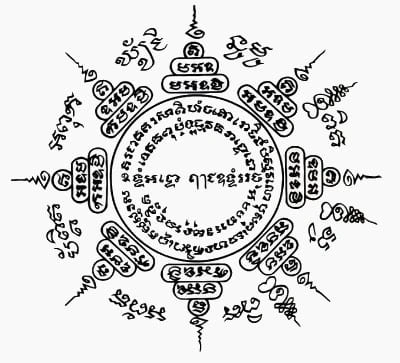
Arokaya Yant (Eight Directions)
Design: Geometric pattern radiating outward in eight directions, often with a central circle or symbol.
Meaning: "Arokaya" means health and well-being. The eight directions represent protection and healing in all aspects of life. Associated with the Buddha's teachings spreading in all directions.
Who chooses it: Those seeking health, healing from illness or recovery, protection during travel, overall well-being.
Spiritual benefit: Promotes physical and mental health, protects against sickness and negative influences, supports healing and resilience.
Seua Yant (Tiger Yant)
Design: Stylized tiger image, often with sacred geometry, script, and protective symbols integrated throughout the design.
Meaning: The tiger represents strength, courage, power, and protection. Symbolizes fearlessness and the ability to face challenges with confidence. Protected by the tiger's spiritual power.
Who chooses it: Those seeking courage and confidence, protection during risky activities, enhanced personal power, or defense against harm.
Spiritual benefit: Provides strength and confidence, protects against violence and danger, enhances personal authority and respect.
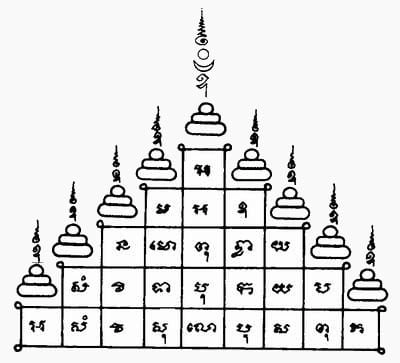
Gao Yord (Nine Spires)
Design: Nine upward-pointing spires arranged vertically or in a pyramid formation. One of the most visually distinctive Sak Yant designs.
Meaning: The nine spires represent the Buddha and the nine levels of Buddhist attainment. One of the most sacred and powerful Sak Yant designs. Provides the highest level of spiritual protection.
Who chooses it: Serious practitioners, those seeking maximum spiritual protection, people with deep Buddhist faith or serious intentions.
Spiritual benefit: Highest level of spiritual protection, blessing directly associated with the Buddha, profound spiritual transformation and guidance.
Paed Tidt (Eight Trigrams)
Design: Eight trigrams arranged in a circular pattern, blending Buddhist and Taoist symbolism.
Meaning: Represents balance and harmony of opposite forces. Protection through equilibrium and cosmic alignment. Reflects Thai tradition's integration of Buddhist and Chinese cosmological concepts.
Who chooses it: Those seeking balance in life, harmony in relationships, equilibrium after conflict or change.
Spiritual benefit: Promotes balance in body and mind, protects against extremes and chaos, harmonizes life circumstances.
Hanuman Phaladej
Design: Stylized depiction of Hanuman, the Hindu/Buddhist monkey god, often with protective script and sacred geometry.
Meaning: Hanuman represents agility, loyalty, courage, and quick thinking. Provides protection through intelligence and adaptability rather than brute strength.
Who chooses it: Those in competitive fields, travelers needing adaptability, people seeking intelligence and wit in their protection.
Spiritual benefit: Enhances mental agility, provides protection through cleverness, supports adaptability and quick thinking.
Garuda Pran (Garuda/Phoenix)
Design: Stylized depiction of Garuda (the eagle/phoenix), often with wings spread and royal symbols.
Meaning: Garuda represents freedom, vision, power, and ascension. Associated with the Thai monarchy and national symbol. Provides protection through elevation above problems.
Who chooses it: Those seeking freedom, enhanced vision and perspective, elevation in life or status, connection to Thai cultural heritage.
Spiritual benefit: Promotes freedom from limitation, provides elevated perspective on challenges, protects through vision and awareness.
Choosing Your Sak Yant Design
Consider Your Intentions
The most important factor in choosing a Sak Yant is alignment with your genuine intentions. What protection or blessing do you seek?
- Health and wellness: Arokaya Yant (Eight Directions)
- Strength and courage: Seua Yant (Tiger)
- Foundation and spirituality: Ha Saeng (Five Lines)
- Ultimate protection: Gao Yord (Nine Spires)
- Balance and harmony: Paed Tidt (Eight Trigrams)
- Agility and adaptability: Hanuman Phaladej
- Freedom and vision: Garuda Pran
Consult with Your Master
The master (Ajarn) may recommend specific designs based on your intentions, life situation, personality, or spiritual path. Trust their guidance. they are trained to perceive what protection or blessing you genuinely need.
Customization is possible: While traditional designs follow established patterns, many masters can personalize them by adjusting proportions, adding initials, combining elements, or incorporating specific symbols that have personal significance to you.
Placement and Design Integration
Traditional Placement Locations
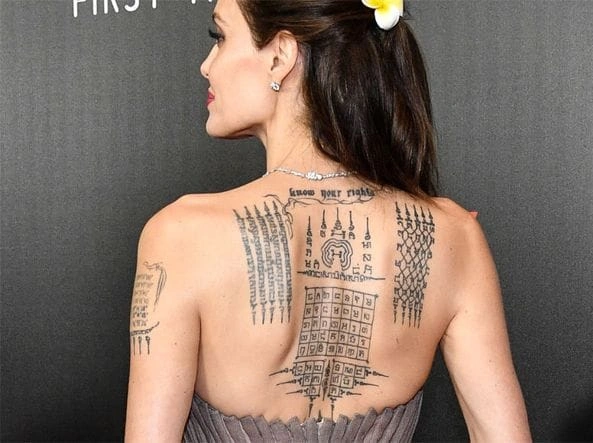
- Upper back: Most popular location for comprehensive designs. Symbolically closest to the spirit.
- Upper arms: Common for moderate-sized designs. Visually striking and protective in daily life.
- Chest: Close to the heart. Suitable for designs focused on emotional or spiritual protection.
- Shoulders: Represents taking responsibility and bearing burdens with strength.
- Forearms: Visible placement. Reflects commitment and openness about spiritual practice.
Design Size Considerations
Sak Yant designs range from small, simple (2–3 inches) to large, complex (6–8 inches or more). Simple designs like Five Lines work at any size. Complex designs like Gao Yord or Hanuman need sufficient space to render the fine geometric detail properly.
Discuss placement and size with your master. They can recommend optimal proportions and location based on your chosen design and the intended spiritual function.
Less Common Designs
Beyond the major designs, masters can apply dozens of other Sak Yant patterns, each with specific meanings:
- Metta Yant: Loving-kindness and compassion
- Mongkut Yant: Crown protection and status elevation
- Solos Yant: Protective geometry for specific situations
- Serpent Yant: Power and mystical knowledge
- Luck Yant: Prosperity and good fortune
Ask your master about less common designs if you have specific needs beyond the popular options.
The Spiritual Function of Sak Yant Design
In the Sak Yant tradition, the design itself is only part of the spiritual transmission. The master's blessing, the mantras chanted during application, the respectful intention during the session, and your own commitment to the spiritual path all contribute to the tattoo's function.
The geometric patterns are believed to act as spiritual antenna, connecting you to the protective and blessing energies they represent. The more you understand and respect your design, the more consciously you can engage with its spiritual dimension.
Book a Sak Yant Session →Last verified: March 2026